Trump Announces Conditions Behind New Nuclear Deal with Saudis
President Trump has been preoccupied with the Middle East during the second year of his second and final term in office, but the good news is he is making significant progress toward long-term stability in the region.
One piece of that stability is shoring up the U.S. security relationships with allies in the Middle East, and that includes Saudi Arabia.
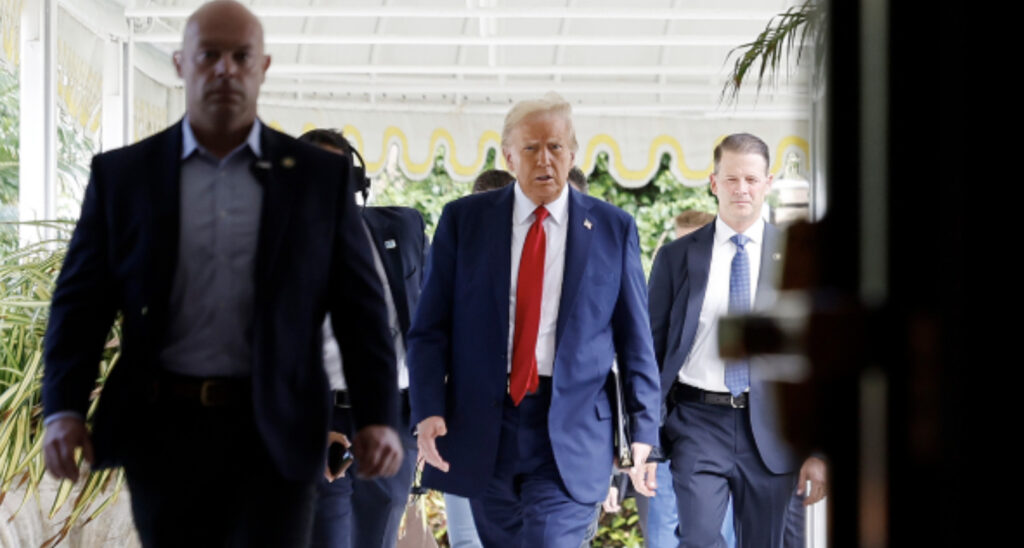
The Trump administration has signed a nuclear cooperation agreement with Saudi Arabia that would allow American companies to develop and operate commercial nuclear power facilities in the kingdom.
Energy Secretary Chris Wright and Saudi Energy Minister Prince Abdulaziz bin Salman signed the agreement Wednesday, according to the Department of Energy.
The two officials also signed a separate safeguards agreement.
The deal will now be sent to Congress, which has 90 days to review it.
Under the agreement, American companies would receive priority access to Saudi Arabia’s civilian nuclear energy program, allowing them to provide nuclear reactors and fuel, according to an administration memo obtained by NPR.
The Energy Department said the agreement is expected to remain in effect for decades and generate billions of dollars in economic activity.
“These agreements reflect our two nations’ shared commitment to strengthening U.S.-Saudi commercial relations, delivering prosperity at home and security to our allies abroad,” Wright said in the announcement.
“Rest assured, these agreements uphold the highest standards of nuclear safety and nonproliferation, while relying on the world’s best nuclear technology and scientists, designed right here in the United States,” he added, per NPR.
However, according to the memo obtained by NPR, the agreement does not include the so-called “gold standard” provisions that would prohibit Saudi Arabia from enriching uranium or reprocessing nuclear fuel.
It also does not require the kingdom to adopt additional measures that would provide greater oversight by the International Atomic Energy Agency.
Some Republicans have already sounded off on the deal.
“Congress should approve only if the deal has the same gold-standard safeguards as our deal with the UAE,” Rep. Brad Sherman, D-Ca., posted on X on Tuesday evening, before the agreement was announced.
“A President waging war to prevent nuclear proliferation in the Middle East should not facilitate proliferation just because U.S. companies stand to make a profit,” he added.
But Trump said Thursday that he would approve the proposed U.S.-Saudi civil nuclear deal only if Saudi Arabia joins the Abraham Accords.
Trump added there would be “no enrichment of material” under the agreement and that it would be limited to non-military civilian nuclear use.
“The Civil Nuclear Deal (There will be no enrichment of material!) being made between the United States Department of Energy and Saudi Arabia, which pertains only to non-military use such as the ones that Iran and UAE (and others) already have, will be approved, but is totally subject to Saudi Arabia joining the very respected and successful Abraham Accords,” Trump wrote on Truth Social.
“The United States is not opposed to Civil (Non-Enriched) Nuclear Facilities,” he added.
The memo states that the United States does not support the development of a Saudi nuclear weapons program and that the agreement is strictly limited to peaceful cooperation on civilian nuclear energy.
It also notes that the agreement incorporates nonproliferation requirements under the Atomic Energy Act. While it establishes a legal framework for cooperation on the nuclear fuel cycle, the memo emphasizes that it does not require the United States to transfer nuclear fuel cycle capabilities or related technologies to Saudi Arabia, NPR reported.
“I think it may make negotiating a reasonable deal with Iran more difficult,” Matthew Bunn, a nuclear proliferation expert at Harvard’s Kennedy School of Government said during an interview with NPR’s All Things Considered.