Senate Confirms Trump Judicial Nominee To 6th Circuit
President Trump has faced repeated legal setbacks in trying to implement his agenda, thanks to left-wing federal judges appointed by Joe Biden and other Democratic presidents.
In most of those cases, the judges appear to be making decisions based on their political opposition to the president and his agenda, as many of their rulings have been overturned.
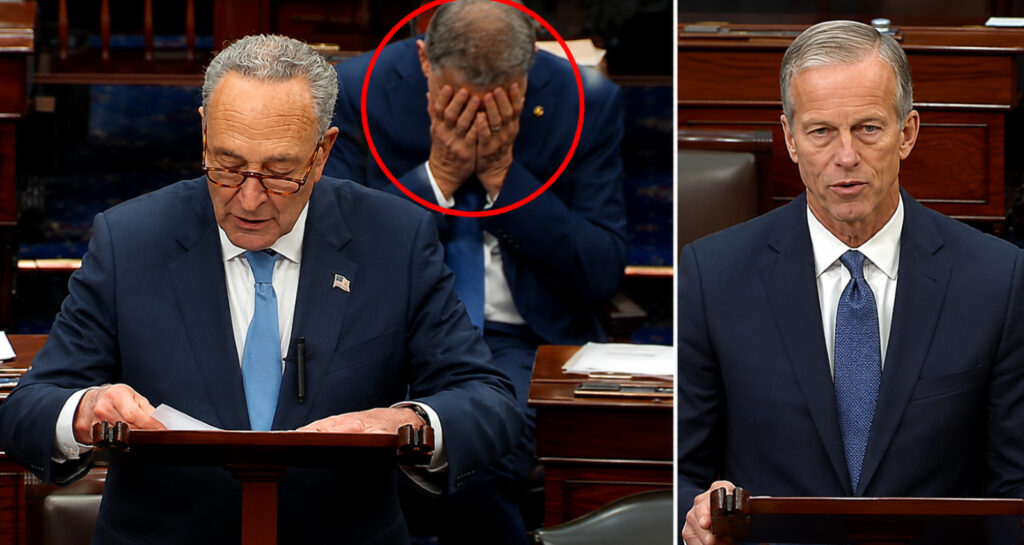
But that said, Trump has been—with the GOP-controlled Senate’s help—steadily filling judicial vacancies on federal benches throughout his second term, and the chamber confirmed another nominee largely along party-line votes on Wednesday.
The Senate on Tuesday confirmed Benjamin Flowers to a lifetime appointment on the U.S. Court of Appeals for the Sixth Circuit by a 49-46 vote, elevating the former Ohio solicitor general to the federal bench despite Democratic objections over his record and his refusal to state who won the 2020 presidential election.
Flowers, an attorney from Upper Arlington and a partner at Ashbrook Byrne Kresge Flowers LLC, will fill the vacancy left by Judge Jeffrey Sutton. President Trump nominated him to serve on the Sixth Circuit, which hears cases from Ohio, Michigan, Kentucky, and Tennessee.
During Flowers’ May 20 confirmation hearing, Democratic senators questioned him about issues that President Donald Trump has disputed and criticized what they described as his evasive responses.
When Sen. Richard Blumenthal, D-Conn., asked Flowers to identify the winner of the 2020 presidential election, Flowers replied that “legally speaking, Joe Biden was certified” before Blumenthal interrupted him.
Because Democrats have turned all hearings involving Trump nominees into political theater and circuses, Blumenthal—who lied about serving in Vietnam—claimed that Flowers’ answers sounded “rehearsed.”
“Above all, a federal judge must be independent, without fear or favor, and your fear, apparently, of Donald Trump, is so much that you practiced with the White House before you came here and rehearsed this answer, and are repeating by rote what you’ve been told to say,” Blumenthal said, calling that conduct disqualifying – as though he was ever going to support Flowers to begin with.
Judiciary Committee Chairman Charles Grassley, R-Iowa, defended Flowers against the criticism, arguing that Democrats were applying a double standard.
Grassley pointed to U.S. Supreme Court Justice Ketanji Brown Jackson’s confirmation hearing, during which she said, “It would be inappropriate for me to publicly weigh in to any subject of political debate.”
In addition, speaking of disqualifying, Jackson refused on several occasions to define a woman.
Sen. Mike Lee, R-Utah, also cited the Code of Conduct for United States Judges, arguing that the same ethical standards apply to both judicial nominees and sitting judges.
A graduate of Ohio State University and the University of Chicago Law School, Flowers clerked for Ninth Circuit Judge Sandra Ikuta before serving as a law clerk for Justice Antonin Scalia.
He later spent several years at Jones Day and, as Ohio’s 10th solicitor general, argued three cases before the U.S. Supreme Court, including the successful challenge to OSHA’s COVID-19 vaccine mandate.
“Flowers resembles most of Trump 2.0’s appellate nominees, whom Mike Davis, the Leader of the Article 3 Project and a Trump judicial selection consigliere, characterizes as battle-hardened,” University of Richmond law professor Carl Tobias told Cleveland.com.
“However, Flowers also resembles many Trump 1.0 appellate nominees, who are ideologically conservative, active members of the Federalist Society, and practiced at large national firms,” he added.
Democrats also questioned Flowers about his defense of Ohio laws during his tenure as solicitor general.
Sen. Amy Klobuchar, D-Minn., pointed to his defense of Ohio’s six-week abortion law, which at the time did not include exceptions for rape or incest.
She also referenced the widely reported case of a 10-year-old rape victim who traveled to Indiana for an abortion after exceeding Ohio’s six-week limit by three days.
Flowers told her that “anyone who’s raped, particularly a child, suffers irreparable harm. There’s no doubt about that.”
But he also added, correctly, that, as the state’s attorney general, his duty was to defend the current state law.