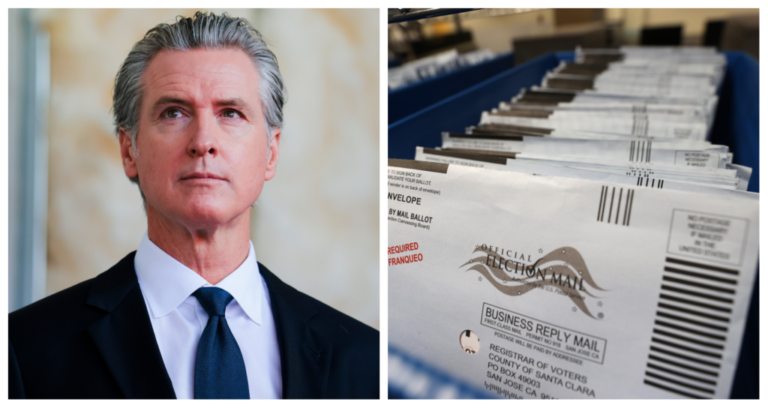
House Passes Congressional Stock Trading Ban, Voter ID Bill
The House of Representatives has approved legislation combining two proposals that have each received broad public support but also generated sharp partisan disagreement on Capitol Hill.
The vote exposed divisions over both election law and congressional ethics, with Republicans arguing the package reflects the priorities of most Americans while Democrats criticized both the substance of the legislation and the decision to combine the two issues into a single bill.
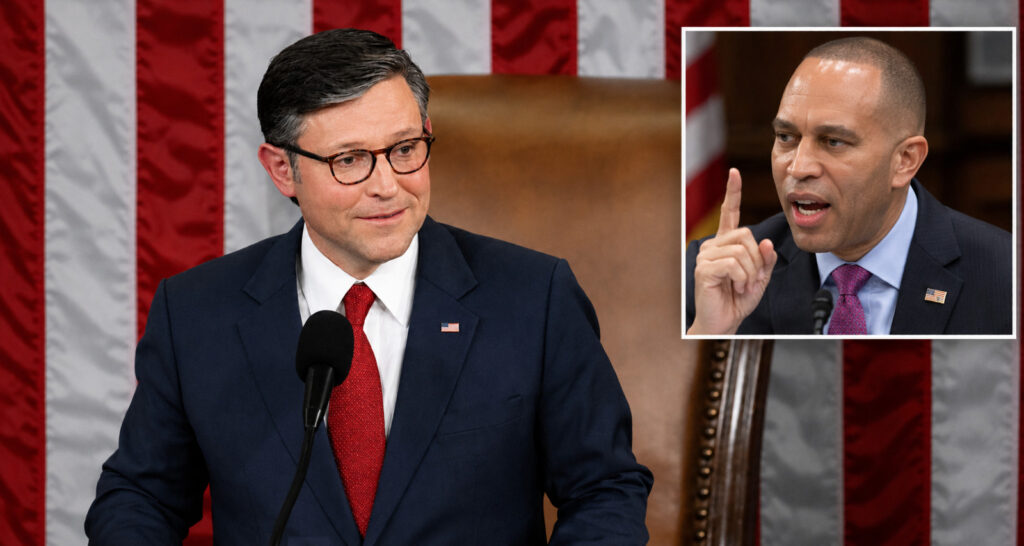
The House voted 231-198 on Wednesday to pass legislation that would ban members of Congress and their immediate families from purchasing individual stocks while also establishing new federal voter identification requirements.
Every Republican except a handful supported the package, while 198 Democrats voted against it.
Only 13 House Democrats joined Republicans in voting for the measure.
The legislation combines two proposals that Republican leaders had debated separately for months before merging them into a single bill.
Supporters argued both measures are widely backed by the public.
Rep. Zach Nunn, R-Iowa, one of the bill’s leading supporters, said the two issues “go hand in hand.”
“One, the overwhelming majority of Americans want this. Two, it’s something that we can get passed this week that gets it into the president’s hands before the August return-to-district period,” Nunn said.
Responding to Democratic criticism, Nunn added, “Only in Washington can you have two wins for 90% of Americans, and Democrats will say that’s one win too many.”
Rep. Stephanie Bice, R-Okla., also defended the legislation’s congressional stock trading provisions.
“The American people deserve to know their elected officials are serving the public, not their own financial interests,” Bice said.
The stock trading portion would prohibit lawmakers and their immediate families from purchasing additional individual stocks.
Current holdings would not have to be immediately sold, though lawmakers would be required to follow public disclosure rules before selling existing investments.
The legislation also allows members to continue using qualified blind trusts.
The voter identification section would require voters to provide government-issued identification, including for certain mail-in voting procedures.
Republicans argued the changes would strengthen election integrity and increase public confidence in federal elections.
Democrats opposed both portions of the legislation, though for different reasons.
Rep. Joe Morelle, D-N.Y., said Democrats support banning congressional stock trading but objected that the legislation does not extend the restrictions to the president, vice president, federal judges or their families.
“I’ve said repeatedly, House Democrats strongly support a stock trading ban for members of Congress,” Morelle said.
He argued the bill before the House failed to go far enough while also criticizing the voter ID provisions as unnecessary restrictions on voting.
Democrats have specifically objected to extending identification requirements to mail-in voting, arguing the changes could make it more difficult for eligible Americans to cast ballots.
Some progressive lawmakers also criticized the stock trading language because it does not require members of Congress to immediately divest existing stock holdings.
Some Republicans opposed combining the two issues into one package.
Rep. Thomas Massie, R-Ky., argued that attaching voter ID provisions made bipartisan passage of a congressional stock trading ban less likely.
“If we really wanted to ban stock trading for members of Congress, we would offer stand-alone legislation and could get a large bipartisan majority,” Massie wrote on X.
Supporters of the legislation pointed to public polling showing broad backing for both proposals.
A 2025 Pew Research Center survey found that 83% of respondents supported requiring voters to show government-issued photo identification before voting.
Polling over several years has also consistently shown strong bipartisan support for restricting or banning individual stock trading by members of Congress, Fox News reported.
With House approval now complete, the legislation moves to the Senate, where its prospects remain uncertain as lawmakers continue debating both congressional ethics reforms and federal election policy.