Holy City Firestorm: Katie Hopkins Confronts British Imam in Viral Jerusalem Showdown Over ‘Religion of Peace’ vs. Global Reality

The ancient, sun-drenched stones of Jerusalem’s Old City, a place that has witnessed millennia of religious fervor and conflict, became the backdrop for a modern-day ideological explosion this week.
What began as a seemingly civil exchange between a prominent British Imam and the controversial commentator Katie Hopkins rapidly escalated into a fierce, no-holds-barred confrontation that has since sent shockwaves across social media platforms.
As tourists, pilgrims, and local residents paused to watch, the two figures engaged in a debate that touched the raw nerves of Western identity, Islamic scripture, and the precarious state of global security.
The flashpoint occurred near the iconic Damascus Gate, a site often charged with political tension.
The Imam, standing tall and speaking with a calm, measured tone to a gathering circle, invoked one of the most frequently cited verses of the Quran: $“Whoever kills a soul… it is as if he killed all mankind.”
$ His message was clear and aimed at the hearts of the onlookers: Islam, at its core, is a faith of profound peace, mercy, and coexistence.
He argued passionately that the violent actions of a radicalized minority should never be allowed to define the spiritual journey of nearly two billion practitioners worldwide.
For a few moments, the atmosphere was one of theological reflection—until Katie Hopkins stepped forward from the crowd.
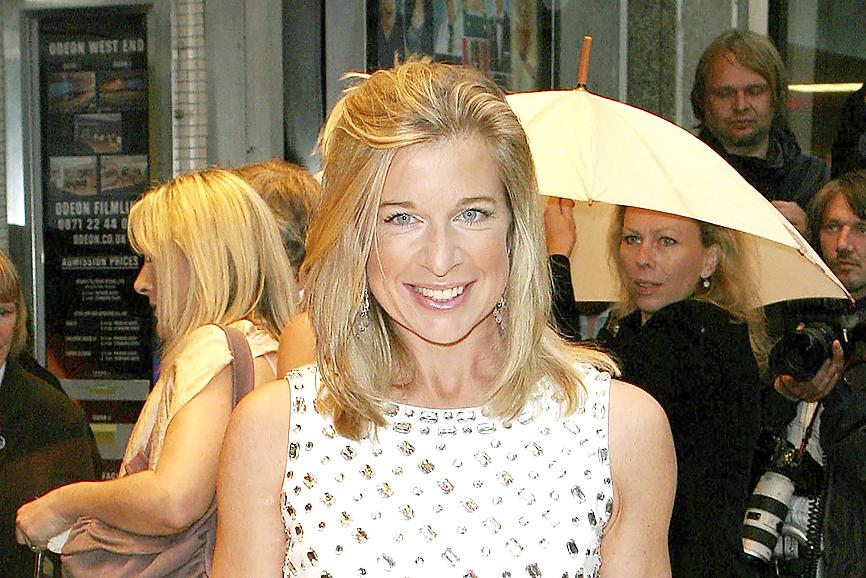
Hopkins, a figure known for her unapologetic and often polarizing views on immigration and Islam, did not waste a second.
She immediately challenged the Imam’s “sanitized” narrative with a precision that left the surrounding crowd stunned.
“If Islam is truly a religion of peace,” she fired back, her voice cutting through the humid afternoon air, “then how do you explain the 109 verses within your own holy texts that specifically call for war, subjugation, and violence against non-believers?
You quote the peaceful lines for the cameras, but you ignore the ‘Sword Verses’ that have fueled centuries of conquest.”
The shift in energy was instantaneous and palpable.
Hopkins didn’t just stick to ancient scripture; she pivoted aggressively to the modern reality of the 21st century.
She began listing a litany of grievances that have come to define the “counter-jihad” movement: the rise of global terror networks, the tragic frequency of attacks across European capitals, and the specific, haunting scandals of “grooming gangs” that have devastated communities across the United Kingdom.
“Why is it,” she demanded, “that whenever blood is spilled in the name of God today, it is almost always accompanied by the same shout?
Why the global jihad? Why the silence from the so-called moderates?”
The Imam, visibly rattled by the rapid-fire delivery of these “razor-sharp facts,” attempted to provide historical and linguistic context.
He argued that many of the verses Hopkins referenced were revealed during specific times of war and were meant as defensive instructions for a community under siege, not as universal commands for eternal violence.
He pleaded for a “nuanced understanding” of the Arabic language and the complexities of Sharia law. However, Hopkins remained relentless.
She dismissed his explanations as “taqiyya”—a term often used by critics to describe perceived deception for the sake of the faith—and insisted that the “elite narrative of coexistence” is a dangerous lie being fed to a vulnerable Western public.
As the debate intensified, the circle of onlookers grew larger, with some shouting in support of the Imam’s call for tolerance, while others nodded grimly at Hopkins’ assessment of the “harsh reality” on the ground.
The confrontation moved from the abstract realm of theology to the deeply personal and political.
Hopkins questioned why the “gaping chasm” between peaceful rhetoric and the actual history of Islamic expansion is never addressed in mainstream media or academic circles.
She painted a picture of a West that is “sleepwalking into its own demise” by refusing to acknowledge the foundational texts that she claims drive radicalization.
The Imam responded by vehemently condemning all forms of criminality and terrorism.
He asserted that those who commit horrors in the name of Islam have “hijacked” a beautiful faith for their own dark, political purposes.
“They do not represent me, they do not represent my mosque, and they do not represent the Quran,” he stated, his voice trembling with emotion.
But for Hopkins and her supporters, these condemnations ring hollow without a fundamental reformation of the texts themselves.
She ended the encounter by looking directly into the cameras of the mobile phones surrounding them, declaring that the time for “polite dialogue” was over and the time for “brutal honesty” had begun.
This Jerusalem showdown was more than just a heated street argument; it was a microcosm of the civilizational tension that currently defines our era.
It highlighted the impossible bridge between two worldviews: one that sees Islam as a victim of extremist hijacking and Western prejudice, and another that sees it as an inherently expansionist ideology that is incompatible with secular Western values.
Critics of Hopkins argue that her approach is inflammatory, reductionist, and serves only to alienate the millions of Muslims who integrate and contribute peacefully to society.
Conversely, her followers see her as a lone truth-teller, a woman willing to say what politicians are too afraid to whisper.
As the sun began to set over the golden domes and limestone walls of the Holy City, the two parties eventually went their separate ways.
However, the footage of their clash continues to accumulate millions of views, sparking thousands of debates in comment sections across the globe.
It serves as a stark, uncomfortable reminder that in the heart of Jerusalem, words are never just words—they are the front lines of an enduring struggle for the soul of the future.
The “Holy City Firestorm” has only just begun to spread.