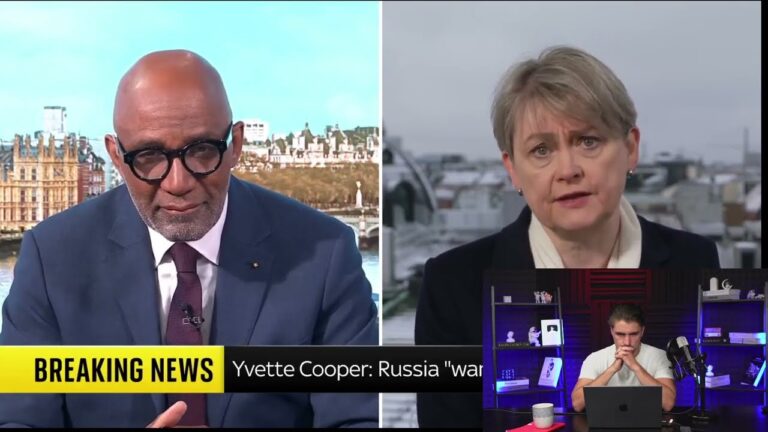
KEMI BADENOCH AND HER SHOCKING “COMPETITION” IN THE MEDIA’S LAIR! anhtuyet
When Kemi Badenoch stepped into a London studio long considered hostile territory for conservatives, few expected the evening to detonate into a defining political spectacle.

For years, critics have portrayed flagship broadcasters like the BBC as intellectual fortresses of the metropolitan left, impervious to disruption from insurgent conservative voices.
Yet what unfolded beneath the studio lights was not the ritual apology many anticipated but an unflinching counteroffensive that reframed the entire narrative within minutes.
Badenoch arrived composed and deliberate, fully aware that every syllable would be dissected across social platforms primed for outrage and applause in equal measure.
The host began with familiar lines about sensitive language, diversity benchmarks, and the moral responsibility of leaders to affirm progressive cultural shifts.
Rather than retreat into rehearsed platitudes, Badenoch pivoted toward what she described as the lived economic strain confronting ordinary British families navigating inflation, stagnant wages, and housing insecurity.
Her tone remained measured, but the substance cut sharply, challenging the premise that symbolic debates eclipse material realities shaping daily life outside media circles.
In that pivot, she exposed a widening chasm between studio discourse and kitchen table conversations unfolding in towns far from Westminster cocktail receptions.
Viewers accustomed to politicians softening edges watched as she calmly dismantled the framing of the questions themselves, refusing to concede linguistic ground without substantive scrutiny.
The presenter attempted to steer the exchange back toward cultural controversies, invoking gender quotas and institutional representation as markers of social progress.
Badenoch responded by questioning whether quotas alone repair crumbling public services or reduce the waiting lists burdening the National Health Service.
Her insistence on connecting cultural rhetoric to policy outcomes reframed the interview from moral lecture to performance audit of governing priorities.
Silence briefly filled the studio when she asked whether symbolic compliance has ever paid a family’s rising energy bill.
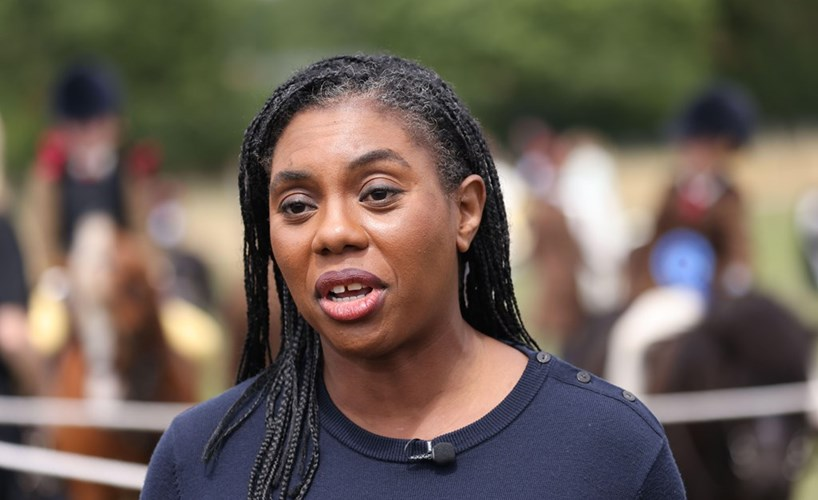
That silence, replayed endlessly online, became emblematic of a perceived elite discomfort when confronted with populist reframing of progressive orthodoxy.
Supporters declared the moment electrifying, arguing that someone had finally challenged what they view as condescending narratives imposed by insulated media institutions.
Critics countered that her rhetoric oversimplified complex social debates and risked trivializing legitimate struggles over discrimination and inclusion.
Nevertheless, engagement metrics surged as clipped segments traveled across platforms at breakneck speed, each caption amplifying either triumph or alarm.
The phrase media’s lair trended within hours, signaling how quickly political theater morphs into mythic storytelling in the digital age.
Strategists within the Conservative Party reportedly recognized the opportunity to galvanize supporters fatigued by years of defensive messaging.
Opponents within the Labour Party dismissed the performance as calculated deflection from policy scrutiny and internal party tensions.
Yet beyond party lines, the exchange illuminated a broader appetite for confrontation over conciliation in contemporary political communication.
Badenoch’s critics have long argued that her style thrives on provocation, but admirers insist that provocation becomes necessary when polite dialogue yields little substantive reform.
The host attempted to regain footing by suggesting that tone matters as much as policy, implying that rhetoric can inflame societal divisions.
Badenoch acknowledged the risk yet maintained that avoiding uncomfortable truths for fear of offense ultimately erodes democratic accountability.
Her closing statement crystallized the tension, asserting that compassion without competence leaves families stranded between lofty ideals and collapsing services.
That line reverberated across timelines, interpreted by supporters as a rebuke of performative politics and by detractors as dismissive reductionism.
Media analysts observed that the viral spread owed less to novelty and more to a public craving authenticity, however polarizing its expression.

The studio confrontation unfolded against a backdrop of mounting economic anxiety, with households recalibrating budgets amid persistent cost pressures.
In such climates, rhetorical focus on structural inequities competes with immediate demands for fiscal relief and administrative efficiency.
Badenoch’s strategy fused these threads, arguing that durable fairness requires economic competence rather than symbolic compliance.
Her detractors contend that framing equity initiatives as distractions risks entrenching inequalities under the guise of pragmatism.
Yet the resonance of her words suggests that many voters perceive a disconnect between institutional messaging and everyday survival concerns.
Commentators likened the exchange to earlier watershed interviews where political figures transformed perceived traps into platforms for agenda setting.
Digital audiences, increasingly skeptical of legacy gatekeepers, amplified the segment as evidence that establishment narratives can be disrupted live on air.
The presenter later defended the questioning as rigorous accountability, rejecting claims that the studio represented ideological ambush territory.
Still, the optics of visible hesitation following Badenoch’s rebuttal fed a storyline of elite disorientation before insurgent confidence.
Political communication scholars note that such moments function as symbolic victories regardless of policy follow through.
The danger, however, lies in substituting viral catharsis for sustained legislative achievement capable of translating rhetoric into measurable improvement.
Badenoch’s team has since emphasized that her objective was not spectacle but recalibration of priorities toward growth, security, and administrative clarity.
Opponents argue that true recalibration demands comprehensive plans rather than sharp exchanges engineered for social media resonance.
Yet in an era where perception shapes momentum, narrative dominance can influence fundraising, volunteer mobilization, and internal party cohesion.
The interview underscored how modern politics unfolds simultaneously in physical studios and algorithmic arenas where emotion accelerates distribution.
Younger viewers, raised amid digital confrontation culture, appeared particularly receptive to assertive dismantling of institutional framing.
Older audiences expressed mixed reactions, some welcoming candor while others lamented the erosion of measured parliamentary decorum.
International observers noted parallels with populist surges elsewhere, where politicians leverage media clashes to signal defiance against perceived orthodoxy.
Whether one applauds or condemns the approach, the encounter demonstrated that the boundaries between journalism and political theater grow increasingly porous.
Badenoch’s ascent within conservative ranks has been marked by similar flashpoints, each reinforcing her reputation for unapologetic clarity. The latest clash may solidify her standing among grassroots activists who interpret confrontation as courage rather than controversy.
Conversely, moderates worry that escalating rhetorical warfare deepens polarization at a moment demanding collaborative governance. As the clip continues circulating, it functions less as isolated interview and more as proxy battle over Britain’s ideological trajectory.
The unanswered question is whether viral dominance converts into durable trust among undecided voters fatigued by perpetual culture skirmishes.

For now, one indisputable reality remains: a studio once deemed a trap became a stage where narrative control shifted unexpectedly. In that shift, Kemi Badenoch not only challenged a presenter but ignited a nationwide debate over who defines priorities in modern Britain.
And as millions replay the silence that followed her final words, the political aftershocks continue reverberating far beyond the studio walls.