The Hopkins Hurricane: “Moral Vandalism” and the Explosive Truth-Bomb That Could Topple a Government and Ignite a Revolution
The air in the television studio didn’t just chill; it solidified into a heavy, suffocating silence.
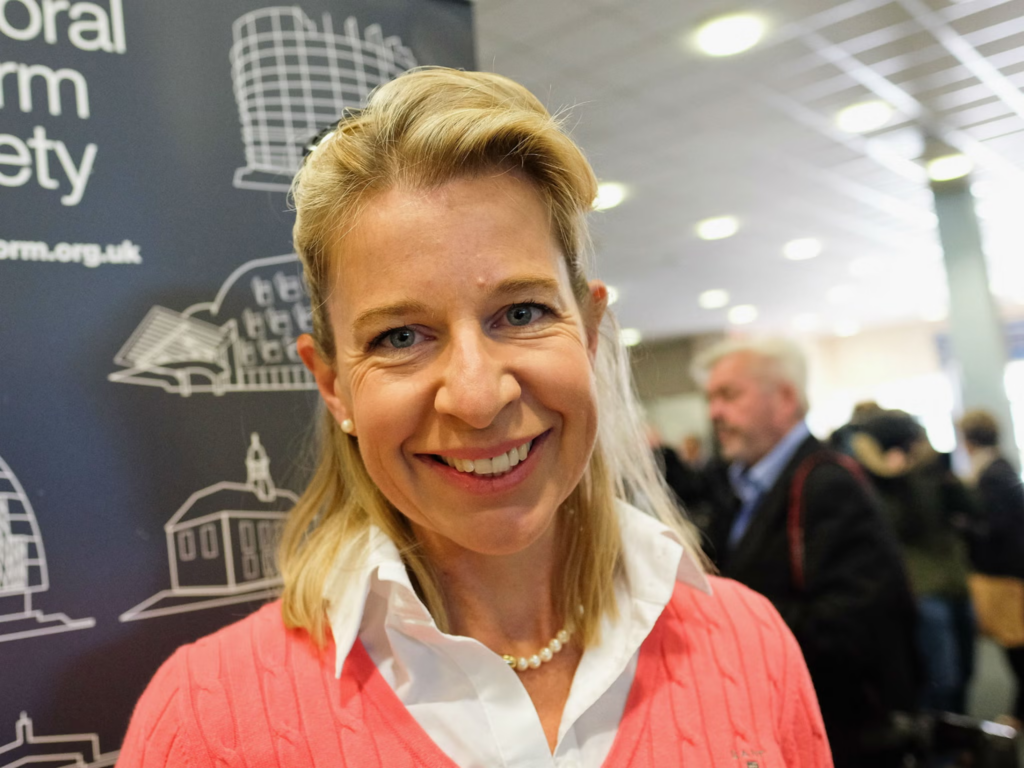
When Katie Hopkins slams her palm against a mahogany table, it isn’t just a physical gesture—it is a sonic declaration of war.
In a moment that has already been etched into the digital archives of political defiance, Hopkins looked past the blinding studio lights, past the frantic hand signals of nervous floor managers, and directly into the collective soul of the British public.
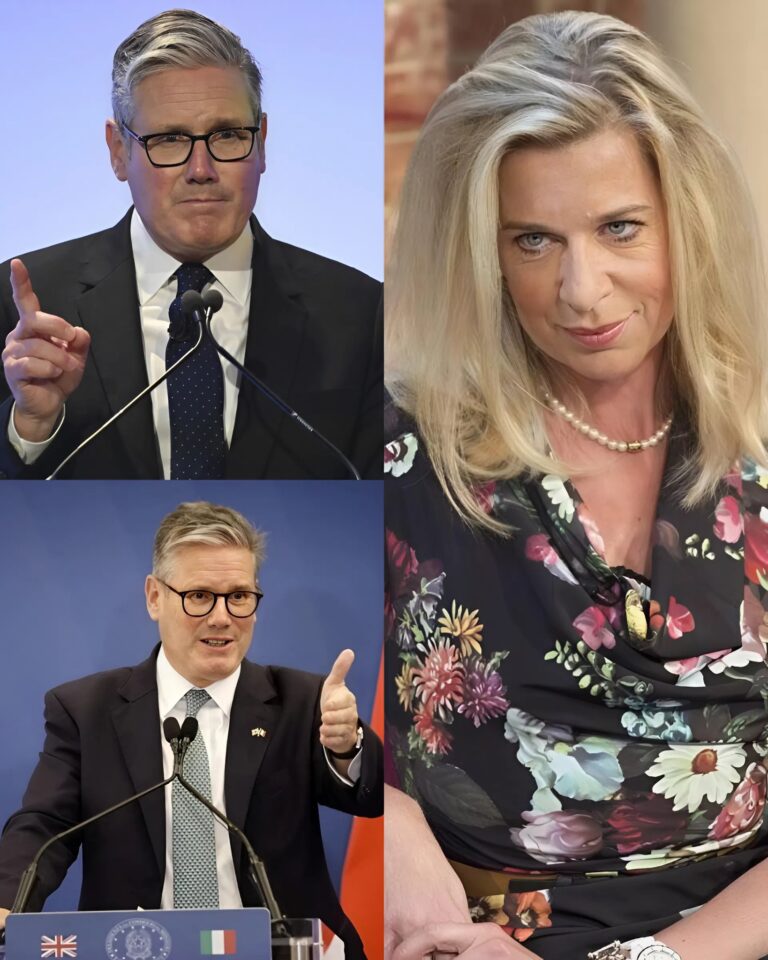
Her accusation was not merely a critique of a specific policy or a temporary lapse in judgment; it was a scorched-earth indictment of the Keir Starmer administration, labeling their entire tenure as nothing short of “moral vandalism.”
The clip, which “detonated” across social media platforms within minutes of airing, captures Hopkins in a state of controlled, incandescent rage.
“Are you deaf, blind, or just too d. a. m. n cowardly to admit this administration poisoned the system from top to bottom?”
she barked, her voice cutting through the artificial politeness of modern broadcasting.
The silence that followed was heavy with the weight of a thousand unsaid truths.
For Hopkins, this wasn’t just a scheduled TV appearance; it was an visceral exorcism of the lies she believes have been “shoved down the public’s throat” by a power-drunk elite.
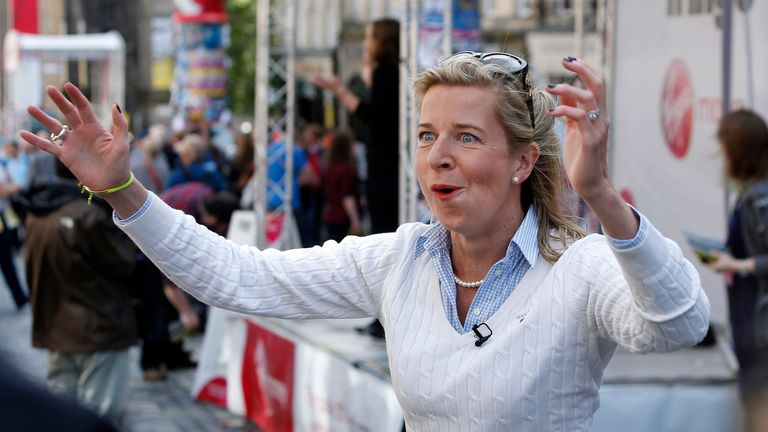
A Crusade Against “Power-Drunk Arrogance”
Hopkins has built a career—and a formidable reputation—on being the grit in the oyster of the British establishment.
While critics often dismiss her as a mere provocateur or a professional contrarian, her supporters see a woman willing to say the unsayable in an age of stifling political correctness.
During this specific broadcast, she took aim at the very DNA of the current government, accusing them of “bullying reality into submission.”
According to Hopkins, we are no longer living in a world of objective facts or shared truths, but in a curated simulation where the truth is treated as inconvenient collateral damage in the pursuit of absolute ideological control.
“They screamed ‘fake news’ while choking the truth,” she said, her voice dripping with a bitterness that resonated with millions who feel increasingly sidelined by the modern political machine.
The metaphor of “choking the truth” paints a vivid, violent picture of a government that doesn’t just disagree with its citizens, but actively seeks to silence them through bureaucratic suffocation and media manipulation.
She argued that the administration’s strategy is simple: redefine reality until the public no longer trusts their own eyes and ears.
The Call for Accountability: “Prosecutions Should Rain Down”
The most striking part of the outburst came when a producer, clearly terrified of the legal or regulatory repercussions, attempted to intervene off-camera.
In the world of polished media, most pundits would take the hint, soften their tone, or pivot to a safer, more neutral topic.
Hopkins did the exact opposite. With a sharp, dismissive wave of her hand, she snapped, “Save it.”
It was a moment of raw, unscripted defiance that proved she wasn’t there to play by the rules of the “ring-kissers” she so loathes.

She then pivoted to a demand that has since become a rallying cry for her base: absolute legal consequences.
Hopkins didn’t just call for polite resignations or a change in polling strategy; she called for justice in its most primal form.
“If laws mean anything, prosecutions should rain down at every level—advisers, enablers, and the architects of the mess,” she demanded.
This wasn’t a call for a toothless parliamentary inquiry or a slow-moving blue-ribbon commission; it was a demand for a judicial reckoning that would strip the masks off the “architects” of what she deems a systemic poisoning of the British state.
She implied that the damage done to the national fabric was not an accident, but a calculated architectural feat of destruction.
Fearless Truth or Unhinged Rhetoric?
The immediate aftermath of the broadcast has seen the nation retreat into its usual, deeply entrenched tribal corners.
To her detractors, this was “unhinged” theater—a desperate attempt by a fading media figure to remain relevant by leaning into dangerous hyperbole.
They argue that her language is inflammatory and designed to incite civil instability rather than foster constructive democratic debate.
They see her as a demagogue playing with fire in a room full of gasoline.
However, to her “fearless” legion of fans, she is the only person left in the public eye with the spine to call out “moral vandalism” for what it truly is.
For them, her anger is not a performance; it is a mirror reflecting the silent fury of the working class and the disillusioned middle class.
Hopkins remains entirely unmoved by the storm she has created.
For her, the polarized reaction is simply confirmation that she hit the mark.
“I don’t need permission to tell the truth,” she stated coldly as the cameras finally cut away.
Her philosophy is simple and uncompromising: history is a predatory force that tracks down and devours those who remained silent when the stakes were highest.